How the gffo puts A live movie theater concert together
GFFO LIVE SYNCRONIZATION
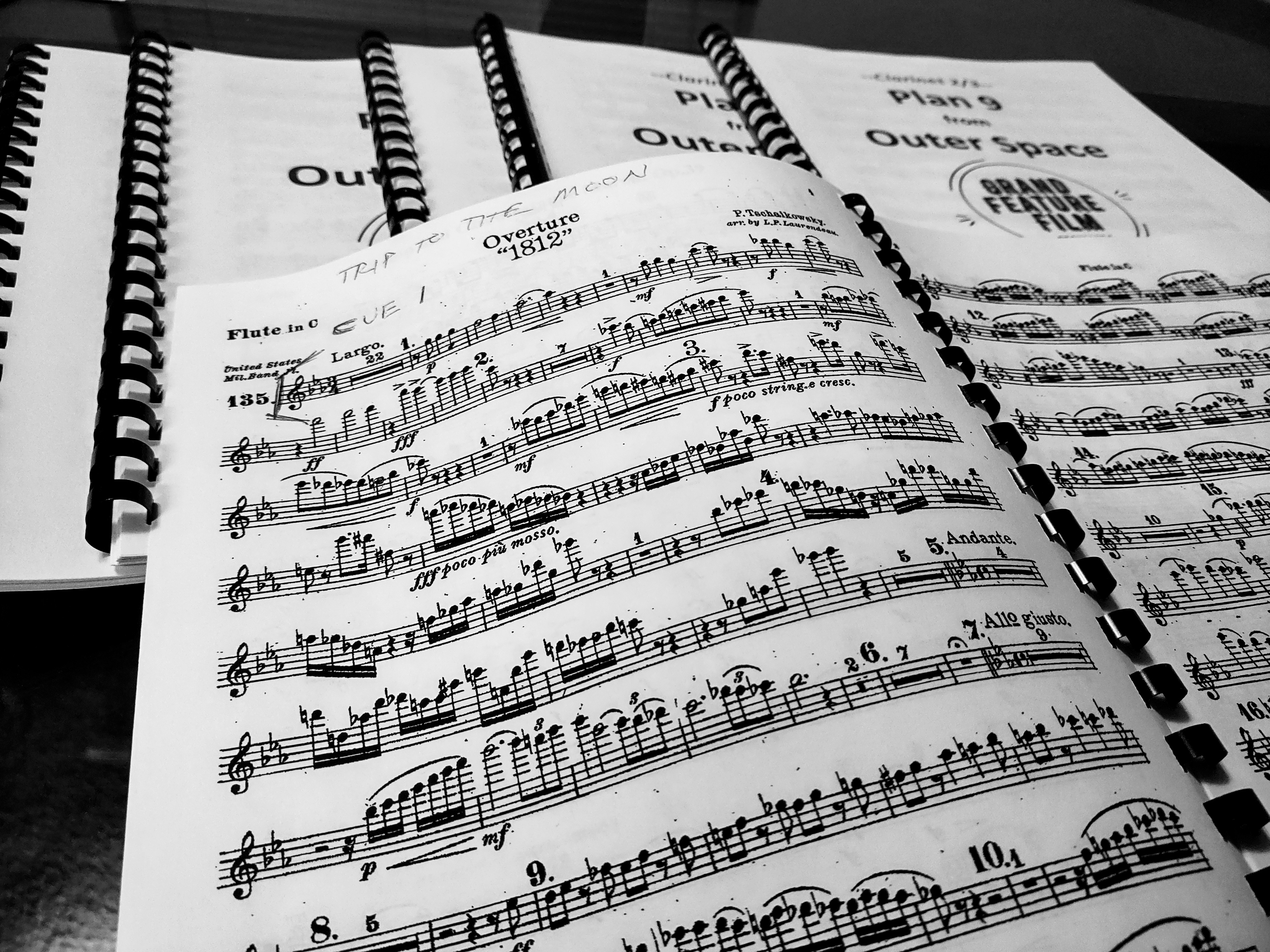
How does the GFFO keep its music in sync with the movie?
The role of a musical film score is to help the audience experience the story on the screen as if they were actually part of it. To do this, the orchestra must make frequent adjustments to its music throughout the film to enhance the experience. Think of it like a dance, where the movie “leads” the conductor as the conductor leads the orchestra. It requires the conductor to memorize scenes so he can anticipate what's ahead and guide the orchestra smoothly from cue to cue.
The GFFO uses a special method called “sub-cueing." It begins with the correct positioning of the orchestra – usually seated between the screen and the first row of seats. The orchestra faces the conductor and the audience with its back to the screen. The conductor faces the orchestra and the movie screen. This way, he can watch the movie and regulate the orchestra's speed, volume, balance, and mood.
What is the sub-cueing method?
Sub-cueing is one of the main methods used by the GFFO to sync the music live. It's a method inspired by the silent film era of the 1920s. They chose this method over the more technology-based Newman system because it allows much more musical flexibility. Plus, Sub-cueing doesn't require any computer monitors or special syncing equipment, allowing the GFFO to set up and tear down quickly during demanding theater screening schedules without connecting or altering the movie theater's regular projection system.
Here's how it works:
Instead of watching a computer monitor with preprogrammed streamers and punches or listening to a click track, the conductor focuses on the main movie screen. He looks for minor sync references, such as a door closing or a character putting a hand on a table. These are called “subpoints.” They aren't noticeable to the audience, but they tell the conductor if he has drifted ahead or behind. He then has to bring the orchestra back up to speed before a part of the movie where the music is directly tied to the action or a scene change occurs. These are called “hit points.” It's important to meet the hit points because you don't want villain music playing during a romantic scene or an orchestra fall after the character's fall has already occurred on the screen.
Actions in many comedies and cartoons can be so heavily tied to the music that there may be several hit points within seconds of each other (think Roadrunner and Bugs Bunny).
Does the GFFO use the Sub-cueing method for sound films as well?
Yes. We employ sub-cueing for both silent and sound films.
Are silent films different from sound films in live performance?
There are lots of similarities. All movie scores today are descendants of the silent film tradition, but there are differences.
Many silent film actors choreographed their movements to express the story without words. They basically performed ballet, so the music has to be in time with their “dance.”
Another thing about silent films is that they require music to be present at all times. The orchestra must sometimes perform improvised transitions between cues to maintain continuity and avoid awkward silences.
In Sound films, the original recorded musical soundtrack is removed and replaced with a live orchestra, but all the dialogue and most of the original sound effects are preserved. This requires the orchestra to balance the volume during scenes when words are spoken. We're careful not to let the music obscure the actors' spoken lines. Even so, we always include open captions just in case.
Is playing in the GFFO different from playing in regular orchestras?
Yes. The relationship between the performers and the conductor in a movie theater orchestra differs in that the conductor pays close attention to the movie, adjusting the tempo, balance, and mood to fit the film. GFFO members have to be aware of instant changes in tempo, balance, and overall volume “on the fly.”
Live movie syncing requires the musicians to be hyper-aware of the conductor's prep movements and to predict the beat before it occurs. This way, the conductor can make quick changes with confidence that the orchestra is right there, without a microsecond's delay. This means all of the information the conductor must communicate to the orchestra is contained in the prep arc and body movements, with very little emphasis on the downbeat point (ictus) of the baton.
There are also times when the orchestra must improvise, with the conductor using special hand signals to determine which notes to play and how to execute the passages. This is important during transitions between written cues when music is needed, especially in silent films.
The conductor must also be aware of the audience's mood so he can adjust the music like a “gas pedal” to add extra excitement or suspense when needed. This means that every performance is different. The rule of The GFFO – “Expect the unexpected.”
Does the orchestra ever mess up?
While accuracy is important, musicians are human and sometimes make mistakes. If something goes wrong, we have many tricks to fix the problem before you notice. Sometimes a mistake works better than the original plan, and we end up keeping it for future performances. We like everything to work without a hitch, but we're always open to “happy accidents.”
Performing live movie concerts might seem difficult at first, but by working together, musicians develop a productive flow of communication. Above all, we have fun. It's incredibly rewarding to connect with an audience and bring classic live movie music back to the cinemas!
What are the audience immersion extras?
Along with the live orchestra, we LOVE to add lots of fun extras, especially during our cult sci-fi films, to make each movie unique and memorable.
Scent-o-Vision - Our fun scratch-n-sniff cards with numbers printed on them. When the number appears on the screen, scratch the corresponding number on the card, and it smells like the movie!
Air-o-Rama - a pneumatic sound effects machine that provides live sound effects powered and controlled by compressed air tanks.
Electro-Rama - Live electro-accoustic devices and special electrical gadgets designed to heighten the sonic and visual experience, including Tesla Coils, Theremins, and Jacob's ladders!
Partici-Rama - Special audience participation cues to break the fourth wall and put the viewer into the story!
Emergo-Esque - This is a nod to William Castle's great movie gimmick from his amazing film, House on Haunted Hill. We won't tell you about this one. You have to experience it for yourself!